
Credible fiscal consolidation has been a consistent pre-condition to easing the monetary policy stance as far as the RBI is concerned.
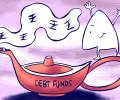
'Maintain a balanced approach with a preference for short-to medium-duration funds.'

Traders will now focus on the RBI's monetary policy review next week which will be key in helping get some clarity on the central bank's thoughts on the outlook for inflation and rates.
Finance Minister P Chidambaram said, "When we return in 2014, we will be more friendly."
A panel has recommended that the RBI should bring down CPI inflation to 4 per cent.
Flush liquidity, apart from softening short-term money market rates, poses inflationary risks.

Markets ended tad lower with financials declining the most ahead of RBI policy review tomorrow.
In the last policy review in December, RBI had decided to keep policy rate unchanged.

CPI inflation will remain below the target of 6 per cent set for January 2016.

Prices of food items like cereals, pulses, and edible oils rose or remained steady in May, a Reserve Bank of India (RBI) report said, indicating there could be another higher inflation print. However, it observed that the Monetary Policy Committee's (MPC's) surprise move to increase interest rates bodes well for its credibility. The RBI's monthly State of the Economy report, released on Tuesday, citing high frequency food price data from the Ministry of Consumer Affairs for the period May 1-12, said the increase in the prices of cereals was primarily because of the surge in wheat prices.
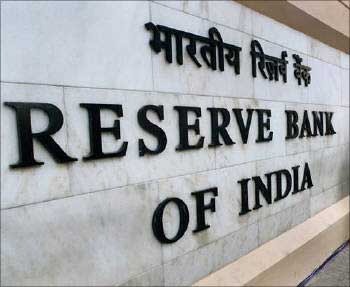
In policy review meet in June, RBI Governor Raghuram Rajan kept interest rates intact.

So for the time being, consumers need not worry about their EMIs on home loans, auto loans etc. going up. However, as April progresses the scenario could change.

An immediate RBI rate cut will lower lending rates for banks' MSME/retail/mortgage loans before the 'busy' industrial season ends in March.

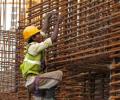
'Investment creates capacity and reduces inflation. Income, employment, and savings rise.'
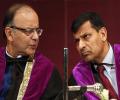
"Finance Ministry and RBI keep talking all the time," Rajan said.

In its Fifth Bi-monthly Monetary Policy Statement, 2017-18, RBI said the second quarter growth was lower than the one that was projected in the October review, and the recent increase in oil prices may have a negative impact on margins of firms and Gross Value Added (GVA) growth.

The six-member monetary policy committee voted 5:1 for the decision, with only Ravindra Dholakia voting for a 0.25 per cent reduction in rates.
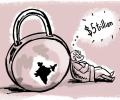
India is much better placed today to deal with future waves of the pandemic relative to the first wave, RBI deputy governor Michael Patra said.
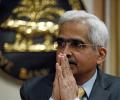
200 staffers, consisting of RBI officials and support teams, who are essential to perform critical functions, were isolated at a separate facility in a dedicated quarantined environment near all three RBI data centres.

S&P Global Ratings on Tuesday cut India's GDP growth projections to 6.5 per cent for the next fiscal as it expects that economies in the APAC region will feel the strain of rising US tariffs and pushback on globalisation. In its Economic Outlook for Asia-Pacific (APAC), S&P said despite these external strains, it expects domestic demand momentum to remain solid in most emerging-market economies.
RBI Governor Duvvuri Subbarao on Tuesday defended the bank's decision to keep the key policy rate unchanged saying inflation could rise to above 8 per cent in the near-term.

Markets continued to fall on Monday, with the Sensex declining 94 points as investors remained cautious amid unabated selling by foreign funds and elevated crude oil prices ahead of the RBI's policy decision later this week. The 30-share BSE Sensex declined 93.91 points or 0.17 per cent to end at 55,675.32. During the day, it tanked 473.49 points or 0.84 per cent to 55,295.74.

The RBI, which started exiting its easy money policy stance since October last, is widely expected to hike key short-term lending (repo) and borrowing rates (reverse repo) by 0.25 per cent at its quarterly policy review on July 27.
Given the pressure from India Inc and the banking fraternity, it is surmised that the portfolio rejig will take place before April.
GDP growth of 7.7 per cent in the first half of this fiscal has "left sceptics gasping and woefully behind the curve", an RBI article said on Wednesday. It also stressed the buildup in the growth momentum is likely to be sustained. The article on the state of the economy published in the Reserve Bank's December Bulletin on Wednesday also said CPI-based retail inflation is expected to ease to 4.6 per cent in the first three quarters of 2024-25 from 5.6 per cent in November.
In the light of credit offtake not picking up despite ample liquidity in the system, the RBI is likely to keep policy rates unchanged in its annual monetary policy, to be unveiled on Tuesday, but may impress upon banks to step up lending to sectors slowing down.
RBI Governor Shaktikanta Das on Tuesday asked private sector banks to ensure continuity in the provision of various financial services, including credit facilities to individuals and businesses, in the face of challenges brought on by the pandemic. Earlier this month, the governor had held a similar meeting with MD and CEOs of public sector banks. During the meeting with the MD and CEOs of select private sector banks, Das also impressed upon the banks to quickly and swiftly implement the measures announced by the RBI on May 5, 2021, in right earnest.

Analysts and economists say that it is too early to expect anything dramatic on the interest rate regime despite the recent reform measures.
The Reserve Bank of India on Wednesday retained the economic growth projection for the current financial year at 10.5 per cent, while cautioning that the recent surge in COVID-19 infections has created uncertainty over the economic growth recovery. In its last policy review, the RBI had projected a GDP growth rate of 10.5 pc for FY'22. Taking various factors into consideration, it said, "the projection of real GDP growth for 2021-22 is retained at 10.5 per cent consisting of 26.2 per cent in Q1, 8.3 per cent in Q2, 5.4 per cent in Q3 and 6.2 per cent in Q4."
WPI-based inflation falls to 5-month low of 6.16%.
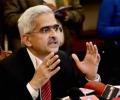
Amid prolonged uncertainty, continued policy support will be crucial for sustained economic recovery from the coronavirus pandemic, Reserve Bank Governor Shaktikanta Das said at the recent meeting of the Monetary Policy Committee. "In this period of prolonged uncertainty, it would be wise to remain agile and respond in a gradual, calibrated and well telegraphed manner to the emerging challenges," opined Das, according to the minutes of the MPC meeting released by the Reserve Bank on Thursday. Observing that economic recovery from the pandemic remains incomplete and uneven, he said, "continued support from various policies remains crucial for a sustained recovery." The governor said the renewed surge in international crude oil prices, however, requires close monitoring.

Fresh dollar demand from importers and some banks on the back of smart rise in the US dollar ahead of RBI monetary policy meeting on Tuesday also weighed on the rupee, said forex dealers.
Focus on inflation, higher CPI projection dampen bond market mood.

The Reserve Bank on Friday retained the real GDP growth projection at 9.5 per cent for 2021-22 as domestic economic activity has started normalising with the ebbing of the second wave of the virus and the phased reopening of the economy. In the June monetary policy, the RBI had lowered the growth projection for 2021-22 to 9.5 per cent from 10.5 per cent estimated earlier. Unveiling the bi-monthly monetary policy, RBI Governor Shaktikanta Dad said high-frequency indicators suggest that consumption (both private and government); investment; and external demand are all on the path of regaining traction.

This is the fifth straight cut in rates by the Reserve Bank of India in as much policy reviews in 2019, and takes the total quantum of reductions to 1.35 per cent.
The continuing global uncertainity has complicated the fight against inflation, opined Reserve Bank Deputy Governor Michael Debabrata Patra during the Monetary Policy Committee meeting held on February 8. According to the minutes of the MPC meeting released on Wednesday, RBI Governor Shaktikanta Das also mentioned that there is considerable uncertainty due to a host of global factors such as rising non-oil commodity prices. The RBI on February 8 hiked the key short-term lending rate by 25 basis points to 6.5 per cent, citing sticky core inflation.
Snapping its six-day losing streak both benchmarks rallied over 1% after RBI kept key policy rates unchanged.

Reserve Bank of India Governor Shaktikanta Das on Friday said the country's economy is an island of stability despite two Black Swan events and multiple shocks. "In an ocean of high turbulence and uncertainty, Indian economy is an island of macroeconomic and financial stability," Das told reporters during the post policy press conference. He said the financial stability, macroeconomic stability and resilience of growth is being witnessed despite two Black Swan events happening one after the other and multiple shocks.

The apex bank hiked its repo, reverse repo (overnight lending and borrowing rates) to 5.25 per cent and 3.75 per cent, respectively, while the cash reserve ratio, or the portion of deposits banks park with RBI, to 6 per cent in line with analysts' expectations.

From the 30-share pack, Adani Port, Bharti Airtel, Asian Paints, IndusInd Bank, Bajaj Finserv, Reliance Industries, Infosys, UltraTech Cement, HDFC Bank, HCL Technologies and ICICI Bank were among the laggards. Tata Motors, Axis Bank, Maruti, Larsen & Toubro, ITC and Tata Steel were among the gainers.
